
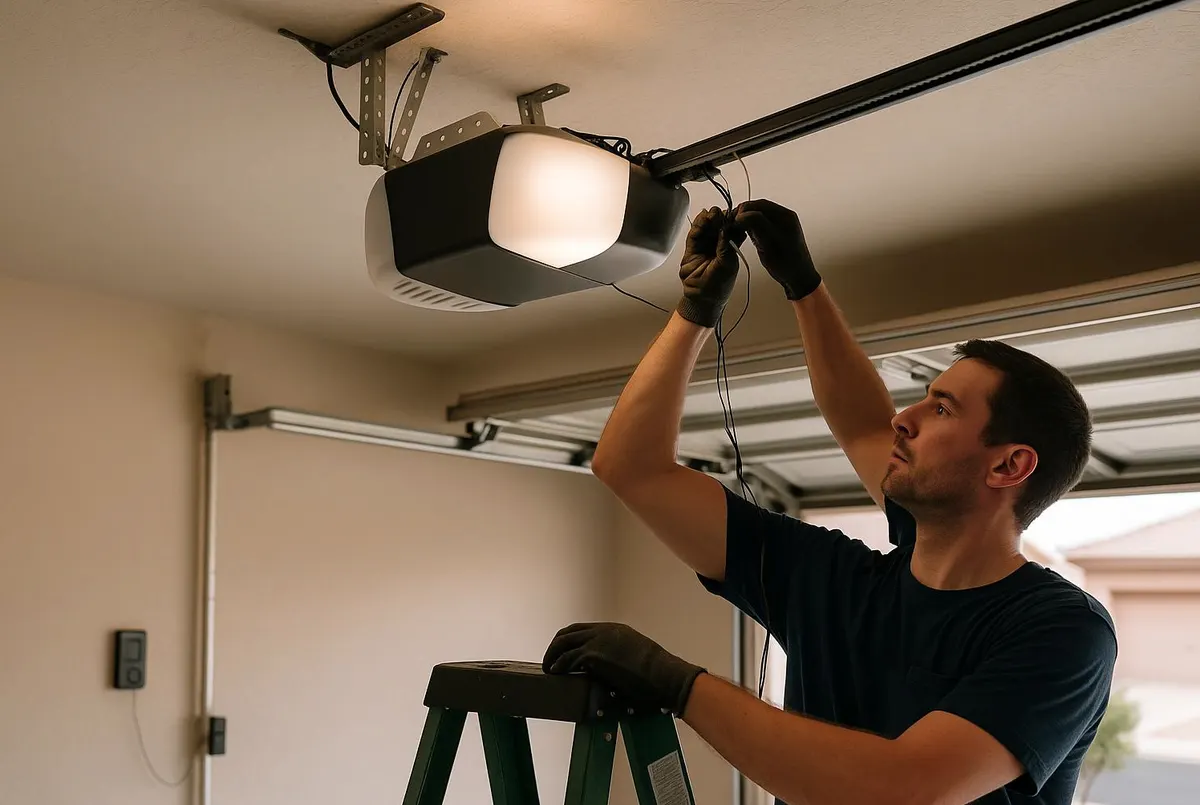
You hit the opener button on a cooler November morning and the door doesn't lift the way it usually does. It shudders, hangs for a second, then lurches upward with a grinding sound you haven't heard before. Or maybe it starts fine but stalls halfway, the opener motor straining like it's fighting something. If you've ever bent down and noticed the bottom of the door seems glued to the concrete, you're not imagining it — that happens here too, just not for the reason people in colder states deal with.
What You're Actually Noticing
Before getting into causes, it helps to pin down exactly what's happening, because the symptoms point to different problems:
- The door hesitates at the start of the opening cycle, then moves normally once it gets going.
- It moves in jerks rather than one smooth motion, sometimes with a grinding or scraping noise.
- The bottom seal looks stuck to the slab, and you can see it peel or stretch slightly before the door breaks free.
- The opener strains audibly, like it's working harder than it should to lift the same door it's always lifted.
- The door won't fully close, reversing or stopping a few inches from the ground.
Each of these points toward a different part of the system, and a technician works through them in a specific order — starting with the simplest, cheapest-to-fix issues before moving to anything involving springs or electronics.
Working Through the Causes, in Order
1. Tracks and Rollers
This is always checked first because it's the most common culprit and the easiest to confirm. Afternoon downpours followed by humid air mean moisture gets into the tracks even in an enclosed garage, especially if the door has gaps or the garage floods slightly during storms. That moisture mixes with dust and grit to form a gummy residue that makes rollers stick and skip instead of rolling freely. A technician will run a hand along the track feeling for buildup, check for visible rust on steel rollers, and look for any spot where the track has pulled away from the frame. The fix is usually a thorough wipe-down with a dry cloth, a non-greasy track cleaner, and — if rollers are pitted with rust — swapping them for nylon rollers, which hold up better in coastal humidity than steel ones.
2. Hinges and Roller Lubrication
Next comes the hardware connecting the panels. Garage doors need lubrication on hinges, rollers, and the torsion spring itself, and in a humid climate that lubricant breaks down or washes away faster than manufacturers' schedules assume. Dry, squeaky hinges cause the jerky, segment-by-segment movement that feels like the door is fighting itself. The check is simple: operate the door manually and watch each hinge point for resistance or squeal. The fix is a silicone-based garage door lubricant applied to every hinge and roller stem — not WD-40, which evaporates quickly and attracts more dust in this environment.
3. Torsion Springs and Tension Loss
If the door still struggles after tracks and hinges are clean and lubricated, springs come next. Metal springs contract slightly in cooler temperatures, and a spring that was already near the end of its lifespan can lose just enough tension on a cool morning to make the opener do more lifting work than it's rated for. This shows up as that straining-motor sound and a door that feels heavier than normal when lifted manually with the opener disconnected. A technician checks this by disengaging the opener and lifting the door by hand — it should feel balanced and hold roughly halfway open on its own. If it doesn't, the spring needs adjustment or replacement, and this is not a DIY job; torsion springs are under enough tension to cause serious injury.
4. Opener Settings and Chain or Belt Tension
With the mechanical side checked, the opener itself is next. Belts and chains can loosen over time, and humidity swelling in the door panels (more on that below) can throw off the force and limit settings the opener uses to judge how hard to push and when to stop. A door that reverses before fully closing, or seems to struggle only in the last few inches, often needs its limit switches and force settings recalibrated rather than any new parts.
5. Swollen Weatherstripping Stuck to the Slab
Last on the list, but often the actual answer to "my door feels stuck to the ground," is the bottom seal. Vinyl or rubber weatherstripping absorbs moisture in a humid garage and can swell enough to grip the concrete slightly, especially overnight when condensation forms. In the morning it peels free with resistance, which feels and sounds alarming but usually isn't serious. The fix is often as simple as replacing a worn or overly soft bottom seal with a fresh one rated for humid climates, and making sure the slab underneath isn't holding standing water from storm runoff.
Why This Shows Up More Here Than Elsewhere
None of this is really about cold in the way it would be further north — Hollywood doesn't get hard freezes. What it does get is heavy humidity, salt air near the coast that accelerates rust on steel hardware, and storm season moisture that swells wood or composite panels and gets trapped in tracks and seals. A door that's technically fine in dry weather can start showing every one of these symptoms the first cool, damp morning after a string of afternoon downpours, simply because moisture had time to settle into every joint overnight.
When to Call Hollywood Garage Door Pro
If cleaning and lubricating the tracks and hinges doesn't solve it, or if lifting the door by hand reveals an obvious spring problem, it's time to call in a technician rather than keep adjusting things yourself. We handle Garage Door Spring Repair for tension issues safely, and our Garage Door Maintenance & Tune-Up service covers the full check — tracks, rollers, hinges, opener calibration, and weatherstripping — in one visit, which is the fastest way to find out exactly which of these five issues is actually behind your sluggish door.
If your garage door is hesitating, grinding, or sticking to the floor, call Hollywood Garage Door Pro for same-day garage door service in Hollywood, FL and the surrounding area.