
A Simple Rule of Thumb
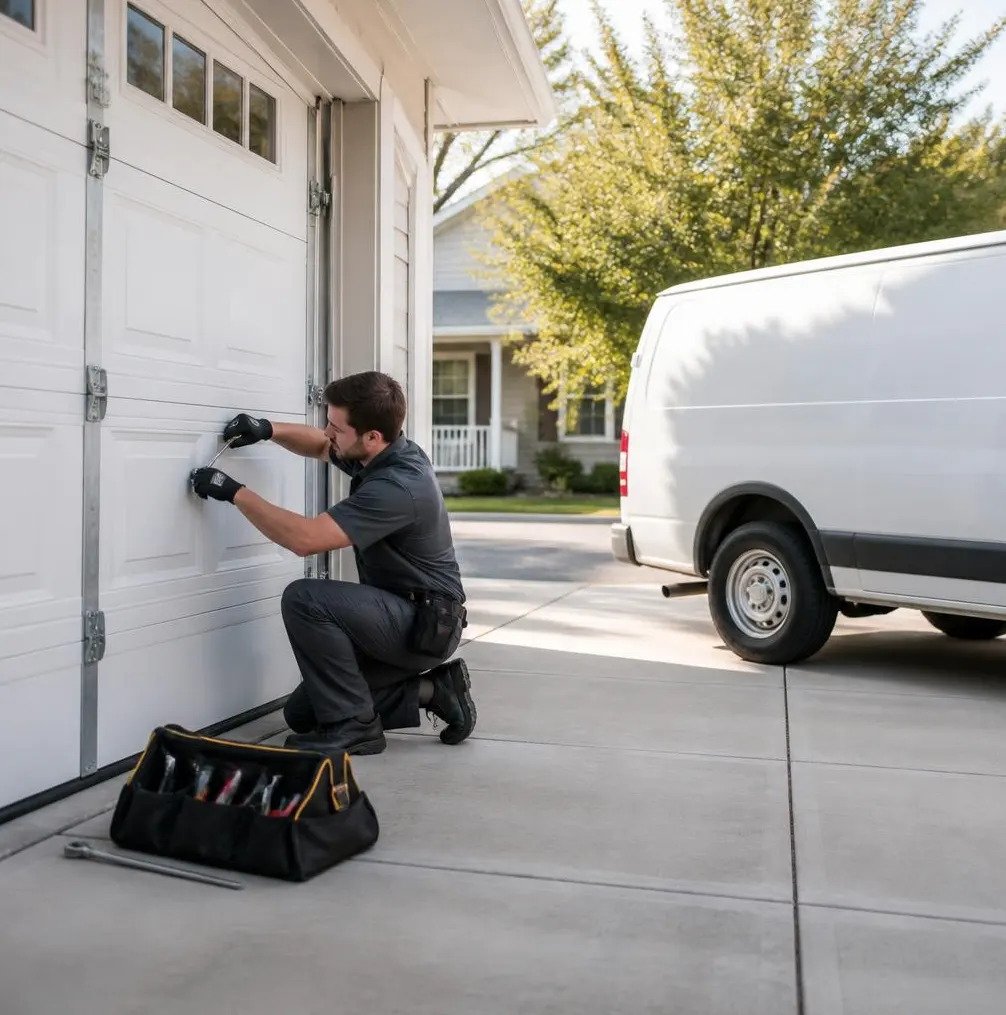
If you can't remember the last time you looked closely at your garage door's springs, cables, rollers, and tracks, it's been too long. Most garage doors fail slowly — a little rust here, a little sag there — long before they fail suddenly. A twenty-minute check once a season catches the small stuff before it becomes a Saturday morning emergency.
The exception: if your door is already sticking, grinding, reversing on its own, hanging crooked, or making a loud bang when it opens or closes, skip the routine checkup and call a technician now. Those are signs of a spring, cable, or track problem that can get worse — or dangerous — fast.
Why This Matters More in South Florida
Hollywood's climate is hard on garage door hardware in ways that drier states don't deal with. Humidity and salt air near the coast accelerate rust on springs, hinges, and tracks. Afternoon downpours and wind-driven rain can work their way past worn weatherstripping. And after a season of named storms and wind-load stress on the door panels, it's worth confirming everything still operates smoothly before the next system rolls through.
Tools You'll Need
- Work gloves
- A flashlight
- A socket wrench or adjustable wrench
- Silicone-based garage door lubricant (not WD-40 or grease, which attract grit)
- A soft rag
- A step stool
The 20-Minute Routine
- Look over the tracks. Shine the flashlight along both vertical and horizontal tracks. You're checking for rust spots, dents, or gaps where the track has pulled away from the wall. Salt air speeds up surface rust, so wipe down any light rust with a dry rag now before it spreads.
- Check the rollers and hinges. Rollers should spin freely and sit evenly in the track. Hinges shouldn't wiggle side to side. A few drops of silicone lubricant on each roller and hinge pin keeps them moving quietly and resists the moisture that causes squeaking and stiffness in humid months.
- Tighten visible hardware. Garage doors vibrate every time they open and close, and that vibration works bolts loose over time. Go around the track brackets and hinge bolts with a wrench and snug anything that's loosened — don't overtighten.
- Test the auto-reverse safety feature. Place a 2x4 flat on the ground where the door closes. Close the door — it should reverse the moment it touches the wood. Then test the photo-eye sensors near the bottom of the tracks by waving a hand through the beam while the door is closing; it should stop and reverse. If either test fails, stop using the opener until it's repaired.
- Wipe down the photo-eye sensors. Dust, pollen, and humidity film build up on the small sensor lenses and can cause the door to refuse to close or reverse unpredictably. A soft, dry cloth wipe on each lens is usually enough.
- Inspect the weatherstripping along the bottom and sides. Look for cracking, gaps, or sections that have pulled loose. Worn weatherstripping lets wind-driven rain from afternoon storms seep under the door and into the garage.
- Do a visual balance check. Disconnect the opener by pulling the release cord, then lift the door halfway by hand. A properly balanced door stays put; if it falls or shoots upward, the springs are under- or over-tensioned.
- Listen during a full open-close cycle. Grinding, popping, or scraping sounds point to something mechanical that a visual check might miss.
Where the Line Is
Everything above — cleaning, lubricating, tightening visible bolts, testing sensors — is safe for a homeowner to handle. The moment the balance test fails, or you notice a spring that's visibly stretched, gapped, or rusted through, stop there. Garage door springs are under extreme tension and are one of the most common causes of serious injury in DIY repairs. The same goes for cables, the torsion bar, and anything involving the opener's internal wiring — those jobs belong to a trained technician with the right tools and clamps.
When to Call Hollywood Garage Door Pro
If your seasonal check turns up a door that won't balance, hardware that's rusted beyond a wipe-down, or an opener that fails the safety reversal test, it's time to bring in a technician rather than push through it. Our Garage Door Maintenance & Tune-Up service covers a full inspection of springs, cables, rollers, and the opener, plus adjustments that are hard to do safely without experience. If the inspection turns up a worn or damaged spring, our Garage Door Spring Repair service handles the replacement correctly and safely, with the right torque and tools for your door's weight and size.
A twenty-minute check twice a year goes a long way toward keeping your door reliable through Hollywood's humidity, salt air, and storm season — but when something looks off, it's better to have a second set of eyes on it. If your garage door needs more than a wipe-down and a drop of lubricant, call Hollywood Garage Door Pro for same-day garage door service across Hollywood, FL and the surrounding area.