
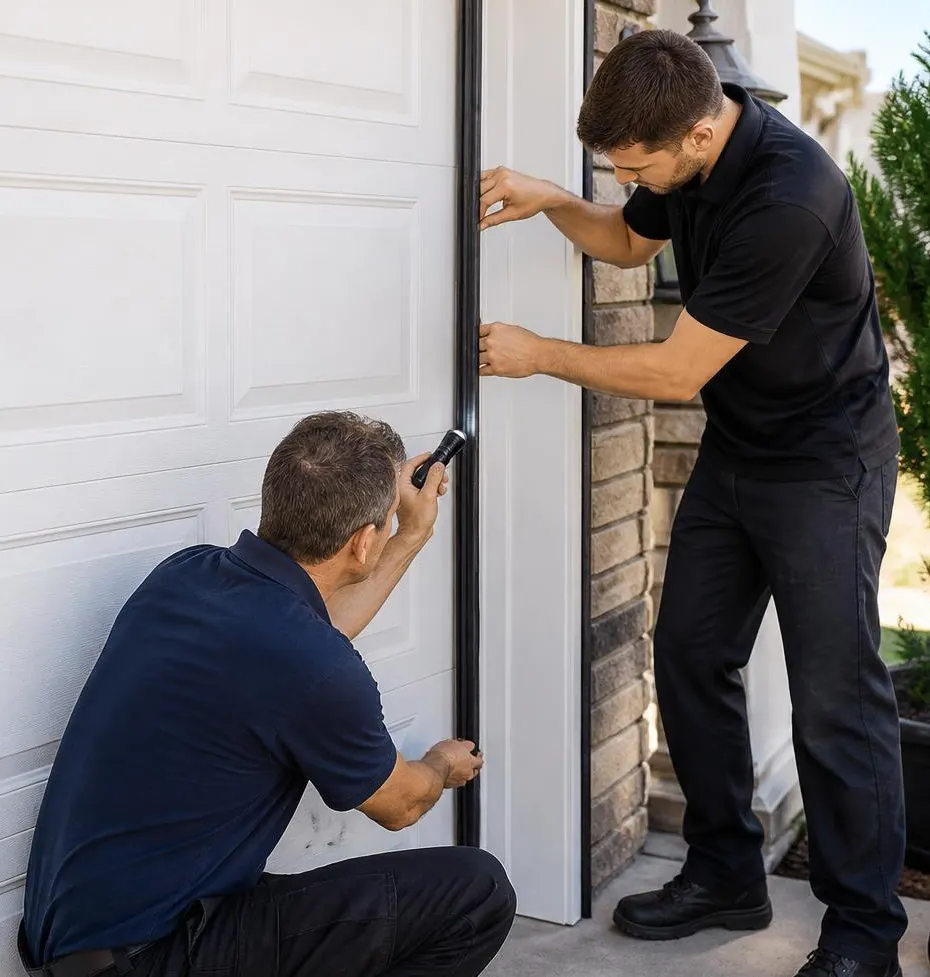
What Waiting Another Season Actually Costs You
A worn garage door spring doesn't send a warning text before it goes. One day it's lifting the door a little slower than usual, and the next day it snaps with a loud bang that can scare pets, crack a door panel, or worse, let the door come crashing down while someone is underneath it. Springs are under enormous tension, and a sudden failure can bend the track, damage the opener, or send metal fragments flying. Waiting through another humid season of expansion and contraction only adds more stress to a spring that's already stretched thin. The good news: worn springs almost always show signs weeks or months before they fail. You just have to know where to look.
The Garage Checklist: Ten Minutes, No Tools Required
Walk through these checks with the door closed and the opener unplugged for safety. Never try to remove or adjust a spring yourself — the goal here is observation, not repair.
1. Look at the Spring's Coils
Stand under the spring (torsion springs sit on a bar above the door; extension springs run along the upper tracks on either side). Look for gaps that are wider in some spots than others, or coils that look stretched out of shape. Even spacing means the spring is still holding tension evenly. Uneven spacing is one of the earliest signs of metal fatigue.
2. Check for Rust or Pitting
Salt air near the coast speeds up corrosion on any exposed metal, and springs are no exception. Light surface rust is common and not urgent, but flaking rust, pitting, or a reddish-brown coating that comes off on your fingers means the metal underneath is weakening faster than it should. Rust also eats into the coil surface unevenly, creating weak points where a crack can start.
3. Listen to the Lift
Open the door manually (pull the release cord first) and listen. A healthy spring makes the door feel balanced and relatively light, lifting with a smooth, even motion. A grinding, popping, or screeching sound as the spring extends or contracts usually means metal-on-metal friction from worn coils or a bent mounting bracket.
4. Test the Balance
With the opener disconnected, lift the door about halfway by hand and let go. It should stay in place or drift down only slightly. If it slams shut or shoots upward, the spring tension is off — either from wear or from a spring that was replaced with the wrong size. An unbalanced door puts extra strain on the opener motor, too.
5. Inspect for Visible Gaps or Separation
On extension springs, check both ends where the spring attaches to the pulley and the wall bracket. Any visible gap, stretching, or separation at these connection points is a sign the spring is nearing the end of its life. On torsion springs, look at the winding cone at each end — cracks here are a red flag.
6. Watch the Door's Behavior Over a Few Open-Close Cycles
Hesitation when starting to open, jerky movement partway through the cycle, or the opener straining with a louder motor sound than usual are all signs the spring is no longer carrying its share of the door's weight. The opener will compensate for a while, but that just shortens its own lifespan too.
7. Note the Spring's Age
Most residential springs are rated for a certain number of open-close cycles, typically translating to several years of normal use depending on how often the door runs. Florida's swings between humid, swollen summer air and drier fall conditions cause more expansion and contraction than springs in milder climates see, which tends to shorten that lifespan. If you don't know how old the spring is, a visual inspection matters even more.
When to Call Hollywood Garage Door Pro
If you spot uneven coils, rust pitting, a door that won't stay balanced, or grinding sounds during operation, it's time to get a technician out before the spring fails on its own schedule instead of yours. Hollywood Garage Door Pro handles Garage Door Spring Repair for both torsion and extension systems, matching the replacement spring to your door's exact weight and cycle rating rather than guessing. If the inspection turns up other issues — a track that's shifted, a panel showing storm damage — we also offer Garage Door Maintenance & Tune-Up visits that catch small problems before they turn into a Saturday morning emergency.
If any of these signs look familiar in your own garage, call Hollywood Garage Door Pro today for same-day garage door service across Hollywood, FL and the surrounding area.